China Top Diode Laser vs IPL Hair Removal Which Is Better?

Time:2026-10-18 Author:Aria
0%

Choosing a hair-removal technology in China can feel like comparing two bright machines in a crowded clinic. Diode Laser Vs Ipl Hair Removal is not a simple contest between “stronger” and “cheaper.” Both use light, but their wavelengths, pulse patterns, and treatment targets differ. A diode laser delivers concentrated energy, often around 800–810 nm, toward melanin in the follicle. IPL uses a broad spectrum of light, filtered for different skin and hair conditions. That difference affects treatment planning, comfort, session numbers, and possible skin reactions. Dark, coarse hair usually responds more visibly than fine, pale hair. Skin tone matters too. Professional assessment remains essential.

This guide examines leading Chinese diode laser and IPL options through practical, evidence-informed criteria. We will consider output stability, cooling systems, handpiece design, operator training, maintenance, and documented safety testing. A lower purchase price may hide service costs, replacement parts, or inconsistent energy delivery. A premium label does not guarantee better outcomes. Real results depend on device quality and technique. Experienced practitioners should match settings to the client’s skin type, hair density, and treatment area. They should also explain sun exposure, patch testing, expected shedding, and realistic limitations. No device removes every hair permanently in one appointment. That expectation needs correction. Even careful comparisons have gaps, because brands publish different testing details and marketing claims. We will question those gaps rather than repeat them. The aim is a balanced choice that supports safer decisions for clinics and consumers.
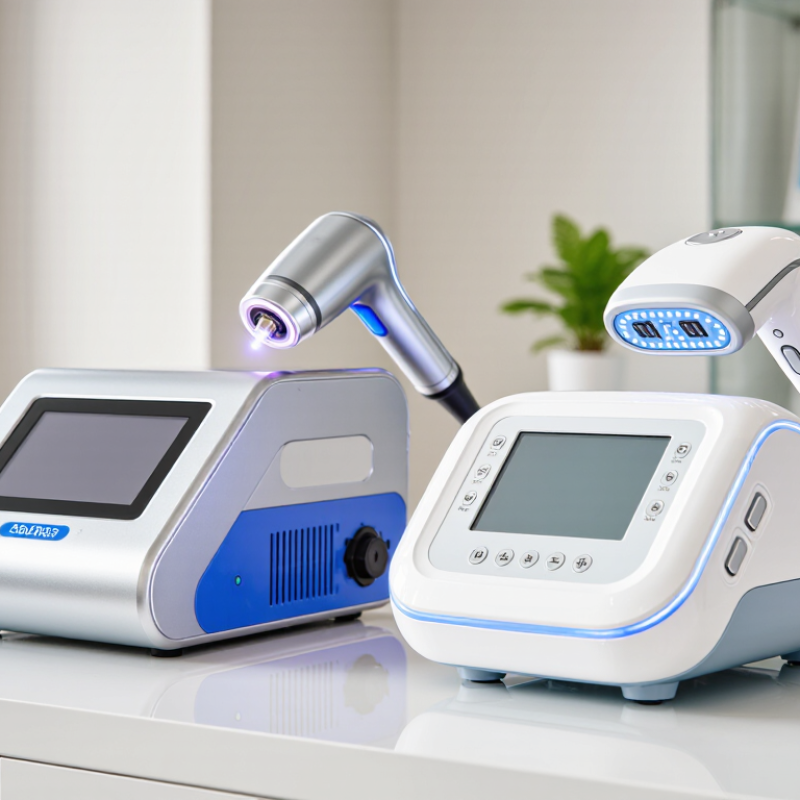
China Top Diode Laser vs IPL Hair Removal Which Is Better?

What Are Diode Laser and IPL Hair Removal Technologies?

Diode laser and IPL are different light-based hair removal technologies. A diode laser emits a focused wavelength, directing concentrated energy toward melanin in the hair shaft. Heat then travels toward the follicle and may reduce future growth. IPL is not a laser. It releases broad-spectrum flashes filtered into selected wavelengths. The light spreads across the skin, so treatment depends heavily on filters, fluence, pulse duration, and cooling.

Hair color matters. Dark, coarse hair usually absorbs more energy than fine or pale hair. Gray, white, and some blond hair may respond poorly because they contain little melanin. Skin tone also changes the risk profile. In darker skin, excess energy can affect surrounding pigment and cause temporary light or dark marks. A qualified practitioner should assess recent tanning, medications, hair texture, and medical history before treatment. A patch test is sensible.

The comparison is not perfectly neat. Device settings and operator skill can matter more than the technology label. Diode laser often offers selective energy delivery, while IPL can cover larger areas quickly. Neither method removes every hair permanently after one visit. Hair grows in cycles, so several carefully spaced sessions are commonly required. Treatment can feel like warm rubber-band snaps. Cooling may reduce discomfort, but it cannot replace proper settings. A small untreated patch after one session is not proof of failure; it may simply reflect the growth cycle.

How Do Diode Lasers and IPL Devices Work on Hair Follicles?

Diode lasers and IPL devices both target melanin inside growing hair. Their pathways are similar, but their light is not. A diode laser delivers a narrow wavelength, commonly near 800 nanometers. IPL releases a broad band of light, often filtered between 500 and 1,200 nanometers. The pigment absorbs light, converts it into heat, and transfers that heat toward follicular growth structures.

Hair must be present.

A diode system usually concentrates energy more precisely around the follicle. IPL spreads energy across several wavelengths, so filters and pulse settings strongly affect treatment depth. Research published in Lasers in Medical Science reports substantial hair reduction after repeated laser sessions, but results vary widely by skin tone, hair thickness, body area, and treatment schedule. The American Academy of Dermatology notes that multiple sessions are normally required because follicles grow in different cycles.

The comparison is not perfectly clean. A 2022 systematic review in Dermatologic Surgery found that study methods and follow-up periods differed considerably, making simple “laser versus IPL” percentages unreliable. In practical use, coarse dark hair often responds more visibly than fine or light hair. Darker skin also needs careful energy control, because surrounding melanin can absorb light. My own reading of the evidence suggests that device settings and operator assessment may matter almost as much as the light source. Photographs can mislead. Results can fade when hormones change.

What Are the Main Differences in Results, Skin Types, and Hair Colors?

Diode laser and IPL both target melanin, but they deliver light differently. A diode device usually emits a focused wavelength near 810 nanometres. IPL uses a broad spectrum, commonly around 500–1,200 nanometres. This difference affects precision, comfort, and safety. The American Academy of Dermatology notes that several sessions are normally required because only growing hairs respond effectively. Four to eight treatments are common, although maintenance may still be needed.

Results depend strongly on skin tone and hair colour. Published comparative studies generally find stronger, more predictable reduction with diode treatment for coarse, dark hair. IPL can also work well, especially on light-to-medium skin with brown or black hair. Darker skin requires careful wavelength selection and cooling, because excess melanin can absorb energy and increase burn or pigmentation risks. Professional guidance from the AAD and laser-safety literature supports conservative settings and trained supervision.

Hair colour remains a major limitation. Blonde, red, grey, and white hairs contain less usable melanin, so neither method performs reliably on them. Fine facial hair can also respond unevenly. That is often overlooked. My practical experience suggests that a small test area is valuable, particularly when skin has recently tanned or contains uneven pigmentation. Results are not perfectly predictable; treatment records, hair thickness, hormonal factors, and device settings can change the outcome. A consultation should assess Fitzpatrick skin type, hair colour, recent sun exposure, and realistic reduction targets before treatment.

China Top Diode Laser vs IPL Hair Removal: Which Is Better?
Main Differences in Results, Skin Types, and Hair Colors

Comparison Dimension Diode Laser Hair Removal IPL Hair Removal Practical Takeaway
Light Technology Uses a concentrated laser beam at a specific wavelength, commonly around 755 nm, 808 nm, or 1064 nm depending on the system. Uses broad-spectrum, non-laser pulsed light that covers a range of wavelengths and is filtered for different applications. Diode laser energy is generally more targeted, while IPL produces a broader light spectrum.
Primary Target Targets melanin in the hair follicle with focused thermal energy to reduce the follicle’s ability to produce hair. Also targets melanin in the hair shaft and follicle, but light absorption can vary more because of the broader spectrum. Both methods depend on pigment contrast between the hair and surrounding skin.
Typical Hair Reduction Often provides strong, predictable long-term hair reduction when the hair contains sufficient melanin and treatment settings are appropriate. Can provide substantial long-term hair reduction, although outcomes may vary more with device design, filters, settings, and operator technique. Neither method guarantees permanent removal. Results usually mean long-term reduction with possible maintenance treatments.
Best Hair Colors Works best on dark brown or black hair. Coarse, highly pigmented hair commonly responds well. Works best on dark brown or black hair. Coarse, pigmented hair is generally easier to treat than fine hair. Dark hair provides the strongest target because melanin absorbs the light more effectively.
Light Blonde, Red, Gray, or White Hair Usually has limited effectiveness because these hair colors contain little or no melanin. Some red hair may respond variably. Usually has limited effectiveness for the same reason; gray and white hair commonly respond poorly. Electrolysis may be considered for hairs with insufficient pigment, subject to professional assessment.
Suitable Skin Types Modern diode systems may treat a broad range of skin tones when the correct wavelength, fluence, pulse duration, cooling, and test patch are used. May be suitable for lighter to medium skin tones. Treatment of darker or recently tanned skin requires greater caution because broadband light can be absorbed by epidermal melanin. Skin type, tanning status, wavelength, cooling, and clinical settings are more important than the device name alone.
Very Dark Skin Longer-wavelength options, such as 1064 nm Nd:YAG technology, are often considered safer for very dark skin than shorter wavelengths. A qualified professional must select the settings. Generally carries a higher risk of unwanted epidermal heating on very dark skin, depending on the system and settings. A professional consultation and patch test are essential. A diode or Nd:YAG option is not automatically safe without proper assessment.
Tanned or Recently Sun-Exposed Skin Treatment may need to be postponed or adjusted because recent tanning increases melanin in the skin and may raise the risk of burns or pigmentation changes. Recent tanning can substantially increase the risk of adverse reactions because IPL exposes the skin to a broad range of light. Follow the provider’s sun-exposure and sunscreen instructions before and after treatment.
Precision of Treatment Focused wavelength delivery allows more selective targeting of pigmented hair when the system is properly calibrated. Broad-spectrum light can treat larger areas, but the energy distribution is less narrowly targeted than a laser wavelength. Diode laser is often preferred when selective hair-follicle targeting is the main priority.
Treatment Speed Can be fast for large areas when equipped with a large spot size, rapid repetition rate, and effective cooling. Can also treat large areas quickly, especially when the applicator has a large treatment window. Actual speed depends on spot size, repetition rate, body area, hair density, and operator technique.
Comfort Level Often feels like a warm snap or rubber-band sensation. Integrated contact cooling may improve comfort. Often feels like brief warmth or snapping. Cooling systems and treatment settings influence comfort. Comfort varies by body area, hair density, skin sensitivity, cooling method, and individual tolerance.
Number of Sessions Multiple sessions are normally required because hair responds best during the active growth phase. Many treatment plans use approximately 6–10 sessions, followed by maintenance as needed. Multiple sessions are also required for the same hair-growth-cycle reason. Many treatment plans use approximately 6–10 sessions, followed by maintenance as needed. The exact number depends on body area, hormonal factors, hair density, skin type, and treatment intervals.
Maintenance Maintenance treatments may be needed because dormant follicles can become active and hormonal changes can stimulate new growth. Maintenance treatments may also be needed for the same biological reasons. Maintenance is normal and does not necessarily indicate treatment failure.
Common Short-Term Effects Temporary redness, mild swelling around the follicles, warmth, or sensitivity may occur and usually settles within a short period. Temporary redness, warmth, mild swelling, or sensitivity may occur after treatment. Increasing pain, blistering, or significant pigment changes require prompt professional evaluation.
Risk of Pigment Changes Hyperpigmentation or hypopigmentation is possible, particularly with excessive energy, recent tanning, darker skin, or poor aftercare. Pigment changes are also possible and may be more likely when broadband light is absorbed by darker or tanned epidermal skin. Patch testing, correct settings, sun protection, and an experienced operator help reduce risk.
Effect of Hormonal Hair Growth Hormonal conditions may cause new hair growth or make results less predictable, even after a successful course. Hormonal conditions may have the same effect and can require medical evaluation and ongoing maintenance. Addressing an underlying hormonal condition may improve long-term management but does not guarantee complete removal.
Home-Use Consideration Professional diode systems are substantially different from lower-powered home devices. Home products should be used only according to their instructions. Home IPL devices generally use lower energy than professional systems and may require more frequent or longer-term use. Do not compare professional and home-use performance solely by technology name.
Overall Advantage Often preferred for more targeted, consistent treatment of dark hair, especially when the system and settings are matched to the skin type. Can be a versatile and efficient option for suitable skin tones with dark hair and may cover large areas conveniently. The better choice depends on hair pigment, skin tone, tanning status, treatment area, device specifications, and practitioner expertise.

Note: Results and safety vary by individual. A qualified, trained practitioner should assess skin type, hair color, tanning history, medications, and contraindications before treatment. A patch test is recommended, and manufacturer instructions should always be followed.

How Do Treatment Safety, Comfort, Cost, and Maintenance Compare?

Diode laser and IPL both reduce unwanted hair, but they are not interchangeable.

A diode device delivers one focused wavelength, often around 810 nanometres. IPL uses a broad light spectrum. A systematic review in Lasers in Medical Science reported long-term hair reduction of roughly 58% to 83% across IPL studies, depending on body area and follow-up time. Results vary widely. Hair colour, skin tone, hormones, and treatment settings matter.

Safety depends more on assessment and technique than advertising claims.

The American Academy of Dermatology advises several sessions and stresses professional evaluation, especially for darker skin tones. Both methods can cause temporary redness, swelling, or pigment changes. Incorrect settings can produce burns. Cooling helps comfort, although IPL may feel like repeated rubber-band snaps, while diode laser often feels warmer and more concentrated. This comparison is not perfectly fair; device quality and operator training can outweigh the technology label.

Cost reports show no universal winner.

The American Society of Plastic Surgeons has listed laser hair-removal pricing in the hundreds of dollars per session, but local rates differ substantially. IPL sessions may cost less, yet more maintenance visits can narrow the gap. Diode treatments may provide longer-lasting reduction for suitable dark hair, but occasional touch-ups remain realistic. I would not promise permanent removal. The FDA generally describes these procedures as permanent hair reduction, not guaranteed hair elimination. A written treatment plan, patch test, eye protection, and documented settings are practical signs of reliable care.

Which Hair Removal Option Is Better for Different Users?

China Top Diode Laser vs IPL Hair Removal: Which Is Better for Different Users?

Choosing between diode laser and IPL depends on skin tone, hair color, treatment area, and personal tolerance. Diode laser delivers concentrated light to the follicle, so it often suits users with dark, coarse hair and light to medium skin. Many users notice slower regrowth after several sessions. Hair usually becomes finer first. That matters.

IPL uses broad-spectrum light and may feel more flexible for large areas, such as legs, arms, or the back. It can be practical for users with moderate hair density and a limited budget. However, results may vary more between devices and treatment settings. It is not always the cheaper option over time.

Users with darker skin should seek an experienced professional who understands safe wavelength selection and cooling methods. Poor settings may increase the risk of burns or temporary pigment changes. Very light, red, grey, or white hair often responds weakly because it contains little target pigment. That limitation is easy to overlook.

A consultation should include medical history, recent sun exposure, medications, and realistic expectations. Test patches are sensible, especially for sensitive skin. Home devices usually provide lower energy than professional equipment, so patience becomes important. I have found that comfort, maintenance habits, and operator skill can influence satisfaction as much as the technology itself. Some users may prefer IPL’s gentler feel, while others accept stronger sensations for more targeted diode treatment.

China Top Diode Laser vs IPL Hair Removal: Which Is Better?

Relative suitability score by user profile (1 = limited suitability, 5 = generally more suitable)

Diode laser is generally more suitable for users with dark hair and fair-to-medium skin because its concentrated wavelength targets melanin more selectively. IPL may be a flexible option for fair-to-medium skin, but its broad-spectrum light usually requires greater caution on darker skin. Neither option works reliably on gray, white, or very light-blonde hair because these hairs contain little melanin. Treatment settings, cooling, operator experience, and medical assessment strongly affect safety and results.

FAQS

How do diode laser and IPL hair removal differ?

A diode laser uses one focused wavelength, often near 810 nanometres. IPL uses broader light flashes. It is not a laser. Diode energy is usually more concentrated, while IPL can cover larger areas quickly.

Which hair colors respond best?

Coarse, dark hair usually responds best because it contains more melanin. Blonde, red, grey, and white hair may respond poorly. Fine facial hair can also react unevenly. Hair color matters greatly.

Can darker skin receive these treatments safely?

Yes, but careful assessment is essential. Extra pigment can absorb light and cause burns or temporary darkening. Conservative settings, suitable filters, cooling, and trained supervision reduce risk. A patch test is sensible.

How many sessions are usually needed?

Several sessions are commonly required, often four to eight. Hair grows in cycles. Only actively growing hairs respond well. Maintenance treatments may still be necessary.

Which method gives stronger results?

Diode treatment may provide more predictable reduction for coarse, dark hair. IPL can work well on suitable skin and hair combinations. The operator, settings, and device quality may matter more than the label.

What does treatment feel like?

Many people describe warm rubber-band snaps. Diode treatment can feel warmer and more concentrated. IPL may feel like repeated quick snaps. Cooling may improve comfort, but it cannot fix poor settings.

What side effects should someone expect?

Temporary redness or swelling can occur. Incorrect settings may cause burns or pigment changes. Recent tanning, medications, uneven pigmentation, and medical history should be discussed before treatment.

Is the hair removal permanent?

These methods usually provide long-term hair reduction, not guaranteed total removal. Some hairs may return because of growth cycles or hormonal changes. I would not promise perfect permanence. Results vary.

Conclusion

Diode Laser Vs Ipl Hair Removal compares two popular light-based methods for reducing unwanted hair. Diode lasers deliver a concentrated wavelength that targets melanin in the follicle, while IPL uses a broad spectrum of light. Both methods work by heating the follicle and slowing future hair growth, but their effectiveness can vary according to skin tone, hair color, hair thickness, and treatment area. Diode laser treatments are often more focused and predictable for dark, coarse hair, while IPL may offer greater flexibility for general cosmetic use when the device and settings are appropriate.

Safety, comfort, cost, and maintenance also influence the best choice. Both options may cause temporary redness, warmth, or sensitivity, so professional assessment and proper aftercare are important. A diode laser may require fewer sessions for some users, whereas IPL can be more accessible and cost-effective. Neither method permanently removes every hair, and occasional maintenance treatments are commonly needed. The ideal option depends on individual characteristics, realistic expectations, budget, and guidance from a qualified treatment provider.


Aria

Aria

Aria is a dedicated marketing professional with a deep passion for innovative strategies and a keen understanding of our company's product offerings. With a wealth of experience in the industry, Aria excels at crafting engaging content that highlights the unique features and benefits of our......